

1. Agenda of the PAS 2026 Plenary
We affirm our shared conviction that science is among humanity’s great achievements and one of its most powerful common goods. Science has enabled humanity to eradicate or control diseases, reduce mortality and hunger, improve living conditions, gain a better understanding of the Earth and the cosmos, and develop technologies that connect societies and expand human capabilities in new ways. The practice of science is an integral part of human life and culture: an expression of the human person's search for transcendence, for meaning, and for ways to reimagine the future. Science and its applications and consequences reach across generations, borders and cultures. Scientific and technological progress entails opportunities and risks and therefore cannot be assessed solely by what is technically possible. It must also be considered in the light of human dignity, the common good, justice, peace, responsibility towards future generations and the integrity of creation.
The purpose of this statement by the Council of the Pontifical Academy of Sciences (PAS), which members of the Academy and participants in the 2026 PAS Plenary are invited to co-sign, is to provide an indication of the thematic areas prioritized at the Plenary, and to address opportunities and challenges for science and science policy action. As is common practice at the PAS, the statement will be shared with the Holy Father, the Holy See, international scientific communities, and the general public.
The agenda of the 2026 Plenary Conference of the PAS is ambitious: reviewing current and emerging developments in the main fields of science; exploring drivers of scientific innovation; coming together in interdisciplinary research for problem-solving; and relating the future of science to changing global contexts and worldviews. On that basis, we are calling for action through science policy and science diplomacy in critical areas.
We greatly appreciate that the Holy Father,
... Read all1. Agenda of the PAS 2026 Plenary
We affirm our shared conviction that science is among humanity’s great achievements and one of its most powerful common goods. Science has enabled humanity to eradicate or control diseases, reduce mortality and hunger, improve living conditions, gain a better understanding of the Earth and the cosmos, and develop technologies that connect societies and expand human capabilities in new ways. The practice of science is an integral part of human life and culture: an expression of the human person's search for transcendence, for meaning, and for ways to reimagine the future. Science and its applications and consequences reach across generations, borders and cultures. Scientific and technological progress entails opportunities and risks and therefore cannot be assessed solely by what is technically possible. It must also be considered in the light of human dignity, the common good, justice, peace, responsibility towards future generations and the integrity of creation.
The purpose of this statement by the Council of the Pontifical Academy of Sciences (PAS), which members of the Academy and participants in the 2026 PAS Plenary are invited to co-sign, is to provide an indication of the thematic areas prioritized at the Plenary, and to address opportunities and challenges for science and science policy action. As is common practice at the PAS, the statement will be shared with the Holy Father, the Holy See, international scientific communities, and the general public.
The agenda of the 2026 Plenary Conference of the PAS is ambitious: reviewing current and emerging developments in the main fields of science; exploring drivers of scientific innovation; coming together in interdisciplinary research for problem-solving; and relating the future of science to changing global contexts and worldviews. On that basis, we are calling for action through science policy and science diplomacy in critical areas.
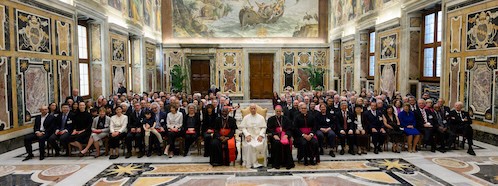
We greatly appreciate that the Holy Father, Pope Leo XIV, gave us the opportunity to meet him in an Audience in which he greeted all participants in the Plenary Conference and their families. His address and prayer gave us guidance for the current and future agenda of the Pontifical Academy of Sciences, pointing to “…how rapidly and profoundly digitalization, artificial intelligence and robotics are transforming our world” (Magnifica Humanitas). He also said “…It is my prayer that you will foster a scientific culture that is ambitious yet humble, rigorous yet open to dialogue, innovative yet responsible, globally cooperative yet inclusive of those most at risk and most in need. In this way, scientific collaboration, as a public good in service of peace, can remain focused on safeguarding God-given human dignity, promoting the common good and caring for creation.”
2. Highlights of indicative futures of sciences in key areas
- Advances in mathematics, computing and artificial intelligence are transforming the processes of discovery, modelling and prediction. New forms of computation permit researchers to address problems that were previously inaccessible and to identify patterns and relationships beyond human capacity. Yet the growing role of algorithms and data also requires renewed reflection on reasoning, creativity, human agency and the relationship between mathematical models and reality. Could ex-post testing of AI capabilities, such as an "Einstein Test" (identifying relativity based on knowledge available before Einstein), help identify the novelty and creativity of AI-enabled combinatorial possibilities? And to what extent is human creativity distinctive from AI in the ability to create new concepts?
- In physics, advances in quantum science, high-energy physics, materials science and related fields continue to expand humanity’s understanding of matter, energy and the universe. High-energy physics allows us to study the early universe. Materials research can contribute to sustainable technologies and future energy systems. Quantum technologies may in the future help solve important problems by using unique quantum effects that do not exist in classical systems. These technologies may lead to faster computers, more sensitive sensors, and ultra-secure communication methods. As we learn to control quantum phenomena, new tools may emerge for healthcare, energy, environmental monitoring, and advanced materials. In this way, quantum science could create innovative solutions to many of society's greatest challenges. With care, these technologies could reduce gaps between societies and promote equity. An open question is on how and when quantum computers will become effective, and whether they will replace classical computers in important tasks.
- Astronomy demonstrates the international character of contemporary science. Major observatories, satellites and shared data infrastructures enable discoveries that no single institution or nation could achieve alone. Open access to astronomical data broadens participation in scientific inquiry and contributes to a more inclusive scientific culture. In space science, virtually all data are already fully open to the world, at least in astronomy, although this is not always the case for Earth-observation data from space. The exploration of the cosmos continues to raise profound questions concerning humanity’s place in the universe and the possibility of life beyond our Solar System.
- Chemistry and molecular sciences offer opportunities for sustainable materials, green chemistry, catalysis, medicine, and new forms of molecular design. Future developments in biology, genetics, epigenetics, agriculture and ecology offer possibilities for improving food security, protecting biodiversity and responding to environmental change.
- Advances in medicine and neuroscience may improve the prevention, screening, diagnosis, treatment and prognosis of disease; address the etiology and pathogenesis of neurodegenerative and various chronic conditions; deepen understanding of the human brain and mind; and promote the efficacy and efficiency of AI-assisted healthcare. Global health and planetary health offer new insights into human, animal and environmental wellbeing, helping to promote the early detection and prompt containment of newly emerging infectious diseases. New advances in personalized medicine are also emerging, with implications for new treatments for several diseases, particularly cancer. Our major concern, however, relates to equitable access to these advanced treatments. Cost is a major issue and a major ethical concern. Science, the pharmaceutical industry and public policy need to work toward bringing these costs down and facilitating equitable access.
- Earth and climate sciences provide indispensable knowledge for understanding the interactions among the geosphere, hydrosphere, atmosphere and biosphere. Space-based observation, global data networks and improved climate modelling strengthen humanity’s ability to anticipate environmental change, manage water and land, adapt to climate change and protect planetary health.
Interdisciplinarity should be regarded as one of the conditions for addressing humanity’s most complex problems. The great challenges confronting humanity, including climate change and threats to planetary health, poverty, inequality, conflict, food and water insecurity, and disease, do not respect disciplinary borders. They require cooperation among the natural sciences, life sciences, engineering, medicine, social sciences and humanities.
We emphasize that basic science is and remains key to scientific progress and to fostering human understanding of fundamental and perennial questions. Much of the excitement in the topics described above has arisen from curiosity-driven research, that is, basic science. Therefore, it is necessary to maintain robust support for these efforts. There are concerns that many countries are currently reducing their support for basic science, and that this may be damaging to the development of new knowledge. Scientific research must retain the freedom to explore questions whose practical applications are not immediately apparent. Such science often leads to significant opportunities and impacts in the future. The sense of wonder is integral to discovery, as emphasized by Aristotle, and should already be fostered through education from a young age. Pope Leo XIV emphasized this in his address to the students of the Vatican Observatory Summer School in 2025: "Do not hesitate to share the joy and the amazement born of your contemplation of the 'seeds' that, in the words of Saint Augustine, God has sown in the harmony of the universe (cf. De Genesi ad Litteram, V, 23, 44-45). The more joy you share, the more joy you create, and in this way, through your pursuit of knowledge, each of you can contribute to building a more peaceful and just world."
3. Future Risks, Uncertainty and Responsibilities of Science
The very power that creates scientific opportunity also creates new risks. Some scientific developments have consequences that extend beyond the capacity of existing institutions to address and govern them adequately. Ethical reflection should accompany scientific development from the outset rather than being added after technologies have become widely deployed. This applies in particular to artificial intelligence, science relating to the climate crisis, and advances in some areas of the biosciences. We elaborate these below.
Artificial intelligence deserves particular attention. AI can accelerate scientific discovery, assist diagnosis and treatment, support modelling and prediction, enable new forms of research and expand human capabilities. It may become an important instrument in addressing major challenges in medicine, climate science and related action, food systems, materials research and other fields. At the same time, AI raises profound questions concerning human agency, cognitive impoverishment, accountability, employment, security, concentration of power, and the distinction between human understanding and machine-generated outputs. We affirm that AI should remain a means in the service of human beings and the common good, rather than becoming an end in itself, as Pope Leo XIV has outlined in his encyclical Magnifica Humanitas. AI may alter the very practice of science. If systems increasingly generate hypotheses, design experiments, analyze data or produce apparently convincing explanations, the scientific community will need to strengthen standards of reproducibility, provenance, transparency and peer review. The PAS has engaged with AI and robotics for more than a decade and continues to do so in cooperation with the Pontifical Academy of Social Sciences. It also contributes to the design of regulatory frameworks for AI that serve the common good, and addresses risks. The participation of the PAS in the newly established Vatican AI Commission is part of this. In view of the risks now recognized, calls for slowing down the development of AI will not be sufficient. A global regulatory framework, supported by an appropriate agency, needs to be established, possibly modelled on the International Atomic Energy Agency (IAEA), with scientific capacity for risk assessment, rights of access to relevant facilities, and an ethical review board to facilitate transparency, protect human dignity, and foster the safe, secure and peaceful use of AI.
The Climate Crisis is upon us. It will worsen over the next few decades as planetary heating exceeds 1.5°C by the early 2030s. We can no longer rely solely on mitigation of emissions. We need to embark on building climate resilience so that people can bend the emissions curve and bounce back from the climate crisis safer, healthier and wealthier to better achieve a sustainable world. The PAS Plenary identified catastrophic risks and the increasingly limited opportunities to act on time. Pope Francis provided the guidance with the Encyclical Laudato Si’, and re-emphasized the need to act by signing the Call to Action for climate resilience in 2024. The Climate Resilience concept adopted for the series of Summits organized by the Pontifical Academy of Sciences and the Pontifical Academy of Social Sciences in 2024-2027 builds on three pillars: Mitigation to reduce climate risks; Adaptation to manage unavoidable risks; and Societal Transformation to enable mitigation and adaptation. This MAST strategy is the foundational principle for these regional summits held with partnering academies in different regions of the world. Pope Leo XIV encouraged us at the Audience for the PAS Plenary 2026 to continue this initiative. Climate resilience is part of a triplet of interlinked environmental crises: climate change, biodiversity loss and global inequality. The consequences for human societies are themselves interrelated, including increased poverty, food insecurity, forced migration, threats to public health and risks to children’s futures. Climate Resilience requires both cross-disciplinary partnerships among researchers, engineers and entrepreneurs, and transdisciplinary partnerships between science and community leaders, including faith leaders, NGOs, and the public. As all scientific disciplines have a role to play in mitigating and overcoming the present and emerging climate crisis, we call for accelerated action on climate resilience that enhances scientific knowledge and practical action.
Besides the lands and seas, the skies are also changing in our time. One important recent challenge is the preservation of dark and quiet skies, which are threatened by the rapidly growing number of satellite constellations and proposed space-based data centers and light-reflecting mirrors. While these technologies may provide societal and technological benefits, they could fundamentally change the view of the pristine night sky for everyone on our planet, affecting not only professional scientists and amateur astronomers but also religious and cultural practices, as well as animal and insect life. Moreover, orbital overcrowding may increase the danger of collisions and collisional cascading. Satellite debris and the re-entry of satellites from Low Earth Orbit also raise environmental concerns, including polluting the atmosphere. We are also concerned about the militarization of space and competing approaches to the national use of the Moon and planets.
In life sciences and their relationship to digital innovation, the opportunities are great, while prudence is required. Genetic and genomic technologies, synthetic biology, artificial life and emerging techniques for modifying organisms offer enormous potential benefits for medicine, agriculture and ecological protection. Yet they also raise deep questions about the appropriate limits of human intervention. Advances aimed at significantly extending the human lifespan and concepts of bio-digitally designed “immortality” require religious, ethical and social reflection and guidance. Technological interventions that alter longevity would have implications not only for individuals but also for families, health systems, economies, demographic structures and relations between generations. The pursuit of longer life should therefore be accompanied by reflection on the dignity and meaning of human life. Brain-computer interfaces and other technologies that restore lost functions offer great promise for persons living with disability and disease. Yet technologies capable of enhancing cognitive functions also raise questions concerning autonomy, inequality, identity, human agency and the boundaries between therapy and enhancement.
The critical themes outlined above played central roles in the 2026 Plenary. They require science, ethics and faith to interact, as they do within the PAS. The scientific community must address the related ethical questions before technological capabilities become socially entrenched.
4. Future for Freedom, Integrity and Responsibility in Science
The PAS, like other academies around the world, has a responsibility to provide orientation for building the future of science. Freedom of scientific inquiry is indispensable to the advancement of knowledge. Science cannot flourish where researchers are prevented from asking questions, testing hypotheses, publishing evidence or challenging established assumptions because their findings might be inconvenient. The freedom of science is a condition for society’s capacity to correct error, falsify previously established findings and respond to new challenges. The Statement of Concern from the Pontifical Academy of Sciences on Protecting Freedom of Science and Preventing Distortion of Scientific Truth (published in June 2025) received wide international recognition and is as relevant today as it was last year. Freedom of science in the age of AI, in particular, requires a commitment to honesty, transparency, reproducibility and a willingness to revise conclusions in light of new evidence.
Scientific integrity requires resistance to the manipulation of research for political, commercial or ideological purposes. Science needs to engage in efforts to reduce disinformation in general, particularly where it undermines confidence in scientific institutions and expertise. Addressing disinformation requires regulatory innovations. Scientific communities need to contribute to the legal and political design of institutions capable of identifying and addressing criminal disinformation that harms people’s welfare, particularly that of children.
Particular attention should be given to those who are most vulnerable to the potentially adverse consequences of scientific and technological change: the poor, children, persons with disabilities, refugees, populations exposed to environmental degradation, communities with limited access to healthcare and education, and future generations.
The pursuit of scientific knowledge should be animated by hope. Hope in science is not the expectation that every problem can be solved by technology. It is the confidence that humanity can use knowledge responsibly, learn from mistakes and cooperate in addressing challenges whose outcomes are not predetermined.
5. Expanding International Science in the Service of Humanity
Science cooperation should be strengthened in areas where all of humanity has a common interest, including climate change, biodiversity, food and water security, infectious and non-communicable diseases, energy, planetary health, disaster preparedness and emerging technologies. International cooperation should include the sharing of expertise, training and opportunities for young scientists and should be inclusive of low- and middle-income countries (LMICs). Scientists from developing countries must be enabled to take part in international scientific projects. The benefits of scientific projects must be shared with all, especially people in developing countries, notably in the fields of health, vaccines, food, artificial intelligence and the space.
Large-scale infrastructures and international collaborations demonstrate how much can be achieved when knowledge is treated as a shared human enterprise. Climate modelling, CERN, the International Center for Theoretical Physics, astronomical observatories, space-based instruments, international centers of excellence such as the CGIAR system, international research networks and open scientific data infrastructures offer models of cooperation in which nations and institutions contribute to discoveries whose benefits extend beyond national borders. These global initiatives and institutions need to be expanded, especially in LMICs. The global expansion of large digital corporations is not an alternative to institutions that serve the public good.
Scientific cooperation should remain possible even where political relations are strained. Scientific dialogue cannot solve political conflicts by itself, but it can preserve channels of communication, sustain mutual understanding and remind humanity of its common intellectual and moral interests. The PAS, as an institution of the Vatican, contributes indirectly to science-based diplomacy and the free circulation of scientists by facilitating meeting among scientists from different nations, even when political conflicts are an issue. Especially in our times of global divisiveness, science must be protected as a space in which consultation and cooperation can continue across political and cultural divides. This requires avoiding travel restrictions on scientific travel and exchange.
6. Future Orientations of the Pontifical Academy of Sciences
The PAS, whose history reaches back to the 17th century and which was modernized by Pope Pius XI about a century ago, is an international Academy with members from all regions of the world. Our Academy is therefore particularly sensitive to international change, including attempts to undermine multilateral cooperation. These trends are part of what the 2026 Plenary considered under the theme of “the Changing World”. Many of the greatest scientific achievements have resulted from international collaboration. International scientific cooperation is a public good and a means of building peace.
The PAS, established as the Academy of the Pope, underlines the importance of dialogue between science, philosophy, ethics and faith. We reaffirm the distinctive role of the PAS as a place where scientific inquiry can encounter moral reflection, philosophy and faith in an atmosphere of intellectual freedom and international dialogue. As stipulated in its Statutes, the PAS “Is placed under the exalted and direct protection of the reigning Supreme Pontiff, is to promote the progress of sciences, organizes meetings to promote the progress of sciences and the solution of important scientific-technical problems, which are fundamental for the development of mankind; and promotes scientific investigations and researches which can contribute, in the appropriate quarters, to the exploration of moral, social and spiritual problems”.
The Pontifical Academy of Sciences shall continue to serve as a place where scientific knowledge, philosophical reflection, ethical responsibility and faith can meet in the service of peace, human dignity and the care of our common home. In line with the PAS Statutes and considering the theme of the 2026 Plenary, Future of Science in a Changing World, the PAS stands for:
- promoting international scientific cooperation, across political, cultural and geographical boundaries;
- strengthening basic science and fostering interdisciplinary research, including engagement with the humanities, to gain new insights;
- bringing scientific insight to bear concretely on the major challenges confronting humanity, including climate change, AI, poverty, conflict, inequality, health, food and water security and planetary stewardship;
- defending the freedom and integrity of science, including freedom of inquiry, open scientific debate, and communication of evidence and uncertainty;
- strengthening dialogue among scientists, religious communities, holders of indigenous knowledge, policymakers and the wider public;
- promoting the scientific method and critical thinking as vital tools in the age of AI and social networks;
- protecting the public from misinformation and maintaining trust in science by promoting scientific understanding, strengthening public communication and defending evidence-based decision-making.
Science can illuminate possible futures. It can reveal dangers before they become catastrophes, open paths towards healing and sustainability, and expand the horizons of human imagination. But science cannot decide what kind of future humanity ought to desire. That responsibility belongs to humanity as a whole. Science and faith together can provide a compass for orientation that includes consideration of implications of science for future generations.
The future of science will be shaped by choices made today. We call for a renewed understanding of science as a shared human enterprise. The knowledge it produces should contribute to the dignity of every human person and to the flourishing of the human family and the Earth that sustains it.
Members of the PAS Council (signatories to the Statement, with appreciation for the contributions of participants to an earlier draft of this Statement):
Prof. Joachim von Braun, President, Pontifical Academy of Sciences, and Bonn University, Germany
Cardinal Peter Turkson, Chancellor, Pontifical Academy of Sciences, Vatican City
Prof. Chien-Jen Chen, Council Member Pontifical Academy of Sciences, and President Academy of Sciences, Taiwan
Prof. Edward De Robertis, Council Member Pontifical Academy of Sciences, and UCLA, USA
Prof. Ewine van Dishoeck, Member Pontifical Academy of Sciences, Professor, Leiden University, The Netherlands
Dr. Fabiola Gianotti, Council Member Pontifical Academy of Sciences, Research Physicist, former Director-General CERN, Switzerland
Prof. Mohamed Hag Ali Hassan, Council Member Pontifical Academy of Sciences and President, Sudanese National Academy of Sciences, United Arab Emirates
Prof. Veerabhadran Ramanathan, Council Member Pontifical Academy of Sciences, Distinguished Professor Emeritus, Scripps Institution of Oceanography, University of California at San Diego; Climate Solutions Scholar, Cornell University, Ithaca, USA
Prof. Singer Wolf, Council Member Pontifical Academy of Sciences, Senior Fellow, Max Planck Society Sciences, Germany
Participants in the PAS Plenary
Prof. Paulo Artaxo, Director of the Center for Amazonian Sustainability, University of São Paulo, Brazil
Prof. Vanderlei Bagnato, Member Pontifical Academy of Sciences, IFSC – University of Sao Paulo, Brazil and TEXAS A&M University, USA
Prof. Eric Betzig, Member Pontifical Academy of Sciences, Depts. of Physics & Molecular and Cell Biology, University of California at Berkeley, USA (Nobel Laureate)
Prof. Helen M. Blau, Member Pontifical Academy of Sciences, Professor, Stanford University, USA
Prof. Emmanuelle Charpentier, Member Pontifical Academy of Sciences, Max Planck Institute, Unit for the Science of Pathogens, Germany (Nobel Laureate)
Prof. Aaron Ciechanover, Member Pontifical Academy of Sciences. Distinguished Professor, Chair, Rappaport-Technion Integrated Cancer Center. Technion-Israel Institute of Technology, Haifa, Israel (Nobel Laureate)
Prof. Francis Collins (by Zoom) Member Pontifical Academy of Sciences. Former Director National Institutes of Health, USA
Prof. Steven Chu, Member Pontifical Academy of Sciences, William R. Kenan Jr. Professor of Molecular and Cellular Physiology and of Energy Science and Engineering, USA (Nobel Laureate)
Dr. Richard Anthony D'Souza. S.J., Member Pontifical Academy of Sciences. Director Vatican Observatory, Vatican City
Prof. Sandra Díaz FRS, Professor and Senior Principal Investigator. CONICET and Universidad Nacional de Córdoba, Argentina
Prof. Robbert Dijkgraaf, President-Elect, International Science Council, The Netherlands
Prof. Jeremy Farrar, Assistant Director General, World Health Organization, Switzerland
Prof. Andrea Ghez, Member Pontifical Academy of Sciences, Professor, UCLA, USA (Nobel Laureate)
Prof. Örjan Gustafsson, Member Pontifical Academy of Sciences, Stockholm University and PAS, Sweden
Sir Demis Hassabis, Member Pontifical Academy of Sciences, Co-Founder & CEO, Google DeepMind, UK (Nobel Laureate)
Prof. Dr. Stefan W. Hell, Member Pontifical Academy of Sciences. Director Max Planck Institute for Multidisciplinary Sciences (Göttingen) and MPI for Medical Research (Heidelberg), Germany (Nobel Laureate)
Dr. Mariangela Hungria, Researcher, Embrapa, Brazil (World Food Prize Laureate 2025)
Prof. Gagandeep Kang, Director of Enterics, Diagnostics, Genomics and Epidemiology, The Gates Foundation, India
Prof. Dr. Juergen Knoblich, Member Pontifical Academy of Sciences, Senior group leader and deputy scientific director, IMBA – Institute of Molecular Biotechnology of the Austrian Academy of Sciences, Austria
Dr. Roger Kornberg, Professor in Medicine, Stanford University, USA (Nobel Laureate)
Dr. Luis Larrondo, Member of the Pontifical Academy of Sciences, Full Professor, Pontificia Universidad Católica de Chile
Prof Jane Lubchenco, Member Pontifical Academy of Sciences, Valley Professor of Marine Biology and Distinguished Professor, Oregon State University, USA
Rev. Prof. Mauro Mantovani, Member Pontifical Academy of Sciences, Prefect, Vatican Apostolic Library, Vatican City
Prof. Tshilidzi Marwala, Rector, United Nations University, Tokyo, Japan
Prof. Michela Massimi, University of Edinburgh, UK
Prof. John C. Mather, Senior Astrophysicist at the NASA Goddard Space Flight Center and Adjunct Professor of Physics at the University of Maryland, USA (Nobel Laureate)
Prof. Anming Meng, Member Pontifical Academy of Sciences, Tsinghua University, China (by Zoom)
Prof Jürgen Mittelstrass, Member Pontifical Academy of Sciences, University of Konstanz, Germany
Prof. Surhud More, Professor of Astrophysics, Inter-University Centre for Astronomy and Astrophysics, India
Prof Helga Nowotny, Former President European Research Council, Austria
Prof José Onuchic, Member of the Pontifical Academy of Sciences, Professor, Rice University, USA
Prof. Svante Pääbo, Professor of Molecular Evolutionary Biology, Founding Director of the Department of Genetics at the Max Planck Institute for Evolutionary Anthropology, Leipzig, Germany (Nobel Laureate)
Prof Linda Partridge, Professor, Institute of Healthy Ageing, and GEE UCL, London, UK
Prof. William Phillips, Member of the Pontifical Academy of Sciences, Physicist, Joint Quantum Institute/US National Institute of Standards and Technology, USA (Nobel Laureate)
Prof. Stefano Piccolo, Member Pontifical Academy of Sciences, Professor, University of Padua, Italy
Prof. Mihály Pósfai, President of the Hungarian Academy of Sciences, Full Professor, University of Pannonia, Department of Earth and Environment, Hungary
Prof. Dr. Olivier Pourquié, Member Pontifical Academy of Sciences, Frank Burr Mallory Professor of Pathology, Brigham and Women's Hospital and Professor, Department of Genetics at Harvard Medical School, USA/France
Prof. Rafael Radi, Member Pontifical Academy of Sciences, Professor and Director, Universidad de la República, Uruguay
Prof. Daya Reddy, Member Pontifical Academy of Sciences, University of Cape Town, South African Republic
Lord Martin John Rees, Member Pontifical Academy of Sciences, Baron of Ludlow, Cosmologist and Astrophysicist, Member of the House of Lords Science and Technology Committee, UK (by Zoom)
Rev. Prof. Rocco Ronzani, O.S.A., Member Pontifical Academy of Sciences, Prefect of the Pontifical Archive, Vatican City
Prof. Gary Ruvkun, Department of Molecular Biology, Massachusetts General Hospital Department of Genetics, Harvard Medical School, USA (Nobel Laureate)
Prof. Laure Saint-Raymond, Professor, Institut des Hautes Études Scientifiques, France
Prof. Hans Joachim (John) Schellnhuber, Member Pontifical Academy of Sciences, Director General, IIASA, Austria
Prof. Neil Shubin, Professor, University of Chicago and President of the National Academy of Sciences, USA
Dr. Magdalena Skipper, Editor-in-Chief, Nature, UK
Dr. Donna Strickland, Member Pontifical Academy of Sciences, Professor, University of Waterloo, Canada (Nobel Laureate)
Prof. Cecilia Tortajada, Member Pontifical Academy of Sciences, Honorary Professor, School of Social and Environmental Sustainability, University of Glasgow, UK and Singapore
Prof. Rafael Vicuña, Member Pontifical Academy of Sciences, Full Professor, Pontificia Universidad Católica de Chile
Prof. Cédric Villani, Member Pontifical Academy of Sciences, Full Professor, Université Claude Bernard Lyon 1, France
Dr. Feng Zhang, Professor and Researcher, Broad Institute of MIT and Harvard, USA
Prof. Maria Zuber, Member Pontifical Academy of Sciences, Presidential Advisor for Science and Technology Policy and E.A. Griswold Professor of Geophysics, Massachusetts Institute of Technology, USA
Read Less