

Summary
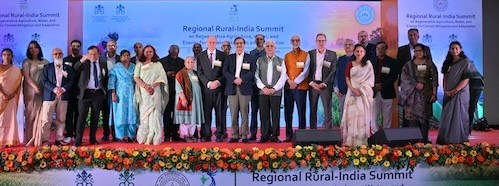
On 3-4 November 2026, scientists, state leaders, policymakers, faith leaders, practitioners and youth innovators met in Lucknow, Uttar Pradesh, to chart pathways to climate resilience for UP and rural India. IIT Kanpur, the Pontifical Academy of Sciences (PAS), and the Pontifical Academy of Social Sciences (PASS) convened the Summit. It builds on the 2024 Vatican Call to Action for Resilience and is part of a series of climate resilience summits in both hemispheres led by PAS and PASS with local partners.
The challenge. Climate change, with its multiple effects, is here and now and is expected to accelerate across India in the coming years. Heatwaves, droughts, floods and an increasingly erratic monsoon are straining crop yields, water sources, soils, many aspects of human health, and farm incomes. The Indo-Gangetic Plains, Bundelkhand, the Hindukush-Himalayan-Tibetan glaciers, and the Terai are among the most exposed regions. Smallholders, farm labourers and women bear the heaviest burden, and declining farm viability is driving migration.
The framework. The Summit reaffirmed the concept of MAST, which stands for Mitigation, Adaptation and Societal Transformation. The Summit affirmed the need to discover innovative ways to offset the harmful effects of climate change and to commit to changing our understanding of human progress, our management of the economy and our way of life in order to decrease emissions. Emissions must urgently begin to decline and swiftly approach net zero to avoid exceeding the 2°C climate threshold and triggering dangerous climate change impacts. The minimum climate overshoot is now projected to be about 1.7-1.8°C around the middle of the century. By contrast, the full implementation of Nationally Determined Contributions (NDCs) would limit warming this century to 2.6°C (according to UNEP Emissions Gap Report 2026). In addition to forceful mitigation of both CO2 and short-lived climate pollutants, accelerated adaptation must now receive
... Read allSummary
On 3-4 November 2026, scientists, state leaders, policymakers, faith leaders, practitioners and youth innovators met in Lucknow, Uttar Pradesh, to chart pathways to climate resilience for UP and rural India. IIT Kanpur, the Pontifical Academy of Sciences (PAS), and the Pontifical Academy of Social Sciences (PASS) convened the Summit. It builds on the 2024 Vatican Call to Action for Resilience and is part of a series of climate resilience summits in both hemispheres led by PAS and PASS with local partners.
The challenge. Climate change, with its multiple effects, is here and now and is expected to accelerate across India in the coming years. Heatwaves, droughts, floods and an increasingly erratic monsoon are straining crop yields, water sources, soils, many aspects of human health, and farm incomes. The Indo-Gangetic Plains, Bundelkhand, the Hindukush-Himalayan-Tibetan glaciers, and the Terai are among the most exposed regions. Smallholders, farm labourers and women bear the heaviest burden, and declining farm viability is driving migration.
The framework. The Summit reaffirmed the concept of MAST, which stands for Mitigation, Adaptation and Societal Transformation. The Summit affirmed the need to discover innovative ways to offset the harmful effects of climate change and to commit to changing our understanding of human progress, our management of the economy and our way of life in order to decrease emissions. Emissions must urgently begin to decline and swiftly approach net zero to avoid exceeding the 2°C climate threshold and triggering dangerous climate change impacts. The minimum climate overshoot is now projected to be about 1.7-1.8°C around the middle of the century. By contrast, the full implementation of Nationally Determined Contributions (NDCs) would limit warming this century to 2.6°C (according to UNEP Emissions Gap Report 2026). In addition to forceful mitigation of both CO2 and short-lived climate pollutants, accelerated adaptation must now receive greater attention and financial support. The most vulnerable populations, with the least resilience, numbering over one billion people in South Asia, require greater support for resilience. Both mitigation and adaptation depend on a transformation of values and governance rooted in ethics and justice. Addressing the climate crisis requires changed mindsets and a responsible worldview centred on caring for people and planet, including reducing waste. Faith leaders addressed these issues at the Summit alongside policymakers and scientists.
Key findings. Climate, agriculture, water and health risks are tightly linked and need joint responses. Forecasts of climate-change-affected monsoon timing and intensity can now be essential farm-planning tools when actually translated into local, timely advice.
Regenerative agriculture can restore soils and water, reduce emissions, and lower farmers’ costs. The Summit explicitly highlighted the significance of technology, from AI and engineering to plant breeding, when intelligently applied. Science and indigenous knowledge can complement each other in this work.
Close attention is needed to reducing food loss and waste, and to the open burning of bio-waste and plastics, including on waste dumps. This requires better diagnostics and corrective action involving local communities. Food loss and waste contribute significantly to greenhouse gas emissions.
Decentralized clean energy and water harvesting form the backbone of rural resilience. District leaders and communities in UP and across the Ganga Basin already demonstrate what works. Women’s networks and young innovators contribute important strengths to innovation and implementation. With strong mitigation and adaptation, rural India can realize substantial benefits, including reduced heat stress for people and ecosystems, more reliable monsoon dynamics, cleaner air, and less crop damage. Significant opportunities for mitigation in rural India were identified, with examples detailed in the Statement below.
Lessons from and for Uttar Pradesh (UP): As the conference took place in Lucknow, Uttar Pradesh, and drew on important insights from the state, this Statement focuses in part on UP while also addressing broader all-India issues. UP has a population of over 240 million. More than 55 percent of its workforce remains engaged in agriculture. UP is India’s largest producer of wheat, rice, potatoes, sugarcane, and milk, among many other smaller crops. With climate change already affecting India through extreme weather events, UP cannot avoid its impacts. The state can advance adaptation, mitigation, and societal transformation. The political leadership of UP, led by the Hon. Ministers of Agriculture, Horticulture, Marketing and Trade, and Cooperatives, exhibited confidence that they are well aware of the challenges and are working on the solutions. Local district leaders echoed similar views. More detailed findings and proposals are presented in the Statement below.
Priorities in the Indian context. Priorities highlighted at the Summit included mainstreaming regenerative agriculture in national and state missions; empowering district and village institutions to plan and act on relevant information; delivering block-level climate advisories to farmers; extending heat-health protection to rural workers; and giving women, communities and youth a formal role in adaptation. Several concrete emission-mitigation measures could be incentivized in rural regions, many with direct co-benefits for adaptation, health, and food production.
Rural areas require access to affordable modern energy sources to protect people from heat stress, droughts, and floods. Such an effort would bring major co-benefits, as replacing traditional fuels such as cow dung and firewood with modern energy sources would help phase out one of the major sources of air pollution in South Asia, particularly in the Indo-Gangetic Plains. As global warming exceeds 1.5°C by 2030 and approaches 2°C in the 2040s, access to modern energy for over a billion people in South Asia could become one of the most impactful adaptation measures available.
The list of promising adaptation actions is long, and policymakers recognise that many measures create positive synergies. Strong calls were made to scale up community water harvesting and groundwater recharge; expand solar irrigation with groundwater safeguards, rural microgrids and cold chains; build risk-sharing finance and insurance mechanisms that reach smallholders; and invest in open climate and agricultural data, as well as local capacity. Additional proposals included improving district-level prediction of monsoons and extreme weather events; conducting long-term trials of regenerative practices across agro-climatic zones, including the application of biochar and dung to low-carbon soils and soil management as a net carbon sink; studying the heat resilience of crops and livestock; modelling the water-energy-food nexus in the Indo-Gangetic Plains; and strengthening the social science of adaptation, migration and finance.
In the follow-up to the Summit, we need to ask “What next?” Having identified the key workstreams, what should the priorities be, and who will lead the critical initiatives? Resources are insufficient to pursue everything simultaneously. Laying out a roadmap and following it is essential for achieving a transformation of this scale. As reflected in the Summit’s deliberations, a division of labor with governments at different levels taking the lead and cooperating with businesses, including farmers, civil society, and scientific communities, can effectively advance the implementation of selected priority actions.
__________________________
The Statement
Preamble
Drawing on the discussions and deliberations of the Regional Rural-India Summit on Regenerative Agriculture, Water, and Energy for Climate Mitigation and Adaptation, held in Lucknow, Uttar Pradesh, on 3-4 November 2026, this Statement has been developed by the co-organizing institutions to identify key challenges, opportunities and priorities for strengthening climate resilience in rural India. The Indian Institute of Technology Kanpur, the Pontifical Academy of Sciences, and the Pontifical Academy of Social Sciences jointly convened the Summit, coordinated by the Kotak School of Sustainability at IIT Kanpur.
Policymakers, district administrators, farmers’ representatives, scientists from the fields of climate, agriculture, economics, and the social sciences, together with representatives of business, banking, civil society, faith leaders, practitioners, and youth innovators from India and abroad, came together to translate evidence into practical and affordable pathways toward climate resilience. Both needs are addressed: mitigating climate-affecting emissions and making rural India and its farming communities more resilient to a changing climate.
The Summit builds on the Call to Action for Climate Resilience issued at the global Summit in the Vatican in 2024. It is part of a series of regionally anchored science-policy dialogues, and it brings the scale, diversity and experience of rural India into the global conversation on climate resilience. Addressing the climate crisis requires a changed mindset, the guidance of traditional knowledge and religious wisdom, and a responsible worldview. Community representatives, regional government leaders, scientists, and faith leaders explored these themes throughout the Summit.
The challenges we face
Climate change is already reshaping the foundations of rural life in India. Rising temperatures, more frequent heatwaves, droughts and floods, along with an increasingly erratic monsoon, are affecting crop yields, water availability, soil health, human health and household incomes. At the same time these pressures are interconnected. Groundwater stress, energy demand for irrigation and cooling, degraded soils and heat exposure reinforce one another across agriculture, water and energy systems.
The Indo-Gangetic Plain is a particularly climate-sensitive region. Melting Himalayan glaciers threaten the long-term reliability of river systems on which hundreds of millions of farmers and rural economies depend. In addition, glacier collapses can have catastrophic effects (cf. the 2026 Nepal disaster). Coastal erosion from sea-level rise and extreme weather endangers fishing communities and coastal agriculture.
Air pollution over India, including sulfate aerosols, currently cools the climate and masks part of the underlying warming. As air pollution declines in the near future, this masking will weaken, and warming over Uttar Pradesh and India as a whole is likely to accelerate. Policy should therefore prioritize reducing emissions of warming agents such as methane (CH₄), carbon monoxide (CO), and black carbon (BC) aerosols, ahead of or at least alongside controls on high-sulfur sources.
The burden of climate stress falls hardest on smallholder and marginal farmers, landless agricultural workers, women and those with the fewest resources to cope. Where farming becomes unviable, people are forced to migrate, putting pressure also on urban regions. Climate resilience is therefore not only an environmental question. It is a question of farm incomes, food and nutrition security, public health, justice and responsibility towards future generations. Special attention is needed to protect India’s estimated 380 million outdoor workers, mostly in farming and construction, who face acute and chronic health impacts from heat waves exceeding 45°C. At the same time, rural energy systems need transformation, for instance, phasing out the use of cow dung as a cooking fuel, because of its adverse health effects, and in addition to GHG emissions.
Our guiding framework: Mitigation, Adaptation and Societal Transformation (MAST)
The Summit reaffirmed the MAST framework as the cornerstone of climate resilience. Mitigation by cutting emissions of greenhouse gases and climate-warming soot aerosols remains essential. Global greenhouse gas emissions need to decline rapidly to limit further warming.
India has articulated its long-term commitment to achieving net-zero emissions by 2070, alongside its Nationally Determined Contributions (NDC) under the Paris Agreement. On March 25, 2026, India’s Union Cabinet approved the country’s updated NDC for the 2031-2035 period with key 2035 targets to reduce the emissions intensity of GDP by 47% from 2005 levels by 2035; achieve 60% cumulative electric power installed capacity from non-fossil fuel-based energy resources by 2035; and create a carbon sink of 3.5 to 4.0 billion tons of CO₂ equivalent through forest and tree cover by 2035. These commitments demonstrate the Government of India’s active engagement in addressing climate change.
Accelerated adaptation, consistent with India’s development priorities and climate commitments, must receive commensurate attention and support. Adaptation is supported by India’s rapid economic growth that sharply reduced extreme poverty over the past two decades. Adaptation strategies need to be tailored to local conditions in order to protect health, livelihoods, and ecosystems. Building resilience means anticipating risks, responding effectively, and innovating and adapting justly.
Neither mitigation nor adaptation will succeed without societal transformation: shifts in values, consumption and economic systems rooted in ethics. Rural India shows why the three components of MAST belong together. Regenerative farming that rebuilds soil carbon and creates a net sink for atmospheric carbon also retains water and lowers input costs. Cutting post-harvest losses of the agri-food system is an important part of mitigation and adaptation. Solar-powered irrigation and rural microgrids help de-fossilize the energy system and thus cut CO2 emissions while keeping water and essential services flowing during heatwaves. Practices like these deliver mitigation and adaptation at once, bring co-benefits to public health and crop yields, and succeed only when communities, women and young people shape and own them.
What the Summit found
Over two days, the sessions progressed from presentations by local government leaders to discussions on scientific foundations and sectoral risks, and then to community knowledge and partnership. The main findings are summarized below.
Monsoon science must reach the farm
Driven by both human-induced perturbations and by El Niño, warming oceans and changing land-atmosphere interactions, the onset of the monsoon is becoming less predictable, while the amount and distribution of rainfall are becoming uneven, with intense short bursts and extended dry spells. These shifts disrupt sowing schedules, raise irrigation needs, and reduce yields. Evidence from the India Meteorological Department and Indian research institutions points to growing unpredictability. Participants agreed that reliable sub-seasonal forecasts and climate models are now essential farm-planning tools, but only if they are translated into timely, local, actionable advice for farmers and state agencies.
Regenerative agriculture offers a transformative pathway
Climate-smart practices have helped farmers manage variability, but have not been enough to restore degraded soils, repair hydrological systems, or cut emissions at the landscape scale. Science can support regenerative agriculture that rebuilds soil health, increases water retention and groundwater recharge, integrates biodiversity and lowers greenhouse gas emissions. Advances in soil science, hydrology, precision agriculture, clean energy and digital monitoring can make regenerative agriculture practical at scale. The Summit stressed that regenerative approaches must be economically viable for farmers and aligned with national missions, including the National Mission for Sustainable Agriculture, soil health programs and state climate action plans.
Reduction of emissions of both CO2 and short-lived climate pollutants brings co-benefits
Without a decisive reduction in the rate of global warming through effective mitigation, climate adaptation will eventually reach its limits. Current anthropogenic warming is driven in roughly equal measure by carbon dioxide (CO₂) and by short-lived climate pollutants (SLCPs), principally methane (CH₄), carbon monoxide (CO), tropospheric ozone (O₃), and black carbon (BC) aerosols. Whereas CO₂ accumulates in the atmosphere for centuries and determines long-term warming, SLCPs persist for days to roughly a decade and therefore offer a means of effectively slowing near-term warming. Many SLCPs also degrade air quality and are harmful to human health and crop productivity. Recent observations indicate that atmospheric concentrations of several SLCPs are no longer increasing over South Asia, which is an encouraging development. The assessment identified multiple opportunities to accelerate the reduction of both CO₂ and SLCPs, many of which provide direct co-benefits for public health, agricultural yields, economic development, and adaptive capacity. Priority measures include:
- Energy transition: accelerating the replacement of fossil fuels with non-fossil sources, in particular solar power, to reduce CO₂ and co-emitted pollutants.
- Rice cultivation: adopting direct-seeded rice (DSR), which avoids continuous flooding and thereby reduces CH₄ emissions, and introducing methane-oxidizing microbes (methanotrophs) into paddy soils.
- Crop residue management: collecting and using stubble as livestock feed in place of open burning, which reduces emissions of BC, CO, and other pollutants.
- Brick manufacturing: modernizing kilns with zigzag firing technology, which improves combustion efficiency and lowers BC emissions.
- Soil carbon sequestration: amending carbon-poor agricultural soils with biochar and dung to enhance long-term carbon storage, yielding net negative emissions.
Climate finance must reach farmers
Adaptation finance remains far below need and rarely reaches smallholders, villages, and district institutions directly. Participants discussed innovative risk-sharing tools, insurance products, and blended finance that can lower the cost of adopting resilient practices. Carbon farming with payments for soil carbon enrichment was identified as a promising approach even for smallholders.
Climate, agriculture and health jointly addressed
Heat stress, deteriorating air quality, shifting monsoons, and water-related disasters are driving dehydration, respiratory illness, mental health challenges, vector-borne and diarrheal diseases, and nutritional risks across South Asia. Farmers, agricultural labourers, and informal workers are among the most exposed to heat stress, resulting in substantial socio-economic costs, including the loss of hundreds of billions of work hours. Crop losses and disrupted food supply chains compound these risks by undermining household nutrition and income. Participants highlighted promising heat-health action plans, climate-informed disease surveillance, early warning systems, nutrition-sensitive agriculture and clean energy for health facilities as proven responses that need wider uptake.
Worldwide food losses and waste remain a challenge. FAO defines food loss as food lost from post-harvest up to – but excluding – the retail stage, and UNEP reports food wasted at retail and household level. Regarding losses, a pan-India assessment conducted on behalf of the Ministry of Food Processing Industries (MoFPI, 2000-22) found roughly 74 million tons of food is lost annually in India, and regarding food waste, according to UNEP (2024) about 78 million tons of food are wasted each year. Food loss and waste not only reduce national income but also contribute significantly to GHG emissions, particularly methane emissions. Reducing food waste requires investments and behavioural change, while reducing food losses requires investment and incentives. Government programs and policies do already address these issues by modernizing agricultural infrastructure and building integrated cold chains, and by “Save Food, Share Food Campaigns”.
Water and clean energy are the backbone of rural resilience
India’s clean energy transition is now central to adaptation, not only to mitigation. Solar-powered irrigation, climate-smart cold chains, battery-enabled rural microgrids, and solar-powered health facilities are already transforming rural systems. Rising heat and peak power demand call for decentralized energy systems that keep water, cooling, and essential services running when they are most needed. Participants cautioned that irrigation energy must go hand in hand with groundwater stewardship.
Local leadership delivers results on the ground
District administrations and communities are already demonstrating what works. Initiatives supported by research institutes and local authorities are restoring groundwater through bunds, ponds and soak pits, thus reviving drought-affected landscapes. In the Ganga Basin, programs under the National Mission for Clean Ganga are advancing integrated water and land management. Participants called for these models to be documented, adequately resourced, and replicated, and for district leaders to have the authority, finance and technical support to act.
Coherent policy, led by the states
Adaptation succeeds when national, state and local policies point in the same direction. Strategies presented by Eastern Uttar Pradesh and Bihar demonstrated how states in the Indo-Gangetic Plains can scale resilient and sustainable practices. Participants identified the need to align agricultural, water, energy, health and rural development schemes so that they reinforce one another.
Traditional knowledge and women lead community adaptation
In some regions, community-built check dams and ponds have recharged groundwater and restored the potential for cropping. Traditional soil and water conservation, agroforestry and local seed systems are proving critical to farm-level resilience. Women’s networks and community institutions are central to these successes, even as women-led and indigenous farming systems face growing climate vulnerability. Participants called for these models to be embedded in formal planning at the village and block levels.
Climate is also driving rural migration
Recurring floods, droughts, heat stress, groundwater depletion and declining farm viability are accelerating migration from rural areas, notably the Indo-Gangetic Plains, drought-prone districts, coastal belts and the Himalayas. Youth turn away from farming because of perceived low opportunities. This mobility affects agriculture, urban systems, public health and social equity. Participants urged that migration be understood and planned for, both by strengthening livelihoods at home and by protecting those who move.
Young innovators have much to offer
The youth-led roundtable showed that Uttar Pradesh is emerging as a hub for agri-tech innovation, supported by a state startup fund and incubation centres in many districts. Young entrepreneurs and researchers are developing IoT-based water management, AI-driven crop advisories, soil monitoring and precision agriculture tools. Linking these solutions to farmers’ needs and to national platforms such as the India Digital Ecosystem of Agriculture can greatly strengthen agricultural extension services.
Science, foresight and global cooperation
Advances in climate modelling, AI-enabled forecasting, resilient crops, health surveillance and decentralized energy give India an unprecedented opportunity to set a long-term adaptation research agenda. Long-term atmospheric observation programs provide diagnostics on the relative contributions of different sources and on the effectiveness of mitigation efforts, as well as opportunities to collaboratively improve uncertain emission inventories. Participants stressed open, transdisciplinary science, institutional readiness to use it, and international partnerships that share knowledge, data, and finance in both directions.
Uttar Pradesh (UP) challenges and opportunities
We had the opportunity to meet in Uttar Pradesh (UP) and learn from local and state-level experiences. UP is a state with a population of more than 240 million. Its per capita income is 53 percent of the all-India average according to the Reserve Bank of India. More than 55 percent of its workforce is engaged in agriculture, as per the latest Periodic Labor Force Survey. Average holding size was 0.75 ha, compared with the all-India average holding size of 1.08 ha in the Agricultural Census of 2015-16. The state has at least four major regions: Western UP, Central, Eastern, and Bundelkhand region. The Eastern region, adjoining Bihar, has the lowest holding size and is the poorest of the 4 regions in terms of per capita income.
UP is the largest producer of wheat, rice, potatoes, sugarcane, and milk, among many other smaller crops. With climate change already hitting India with many extreme weather events, UP is also adversely affected, and has to work on adaptation, mitigation, as well as societal transformation. Due to its weight in the state’s economy, agriculture is key to adaptation in UP and can also contribute to mitigation.
The political leadership of UP, led by the Hon. Ministers of Agriculture, Horticulture, Marketing and Trade, as well as Cooperatives, expressed confidence that they are well aware of the challenges and are working on the solutions. This was complemented by the former Chief Secretary of the State, who recounted several steps they have taken to make UP’s agriculture and rural sector climate resilient. Increasing irrigation, rejuvenating several rivers, digging ponds (Amrit Sarovars), promoting natural farming, direct-seeded rice (DSR), drip and sprinkler irrigation, and reduced chemical inputs in selected areas of the Ganga basin were also highlighted during the discussions. Similar achievements were echoed by the local district leaders. They are all working closely with the centre on heat-resistant varieties of wheat, which is likely to be among the most affected crops as temperatures spike at the end of February and in early March. It is estimated that without the use of heat-resistant varieties, wheat production may go down by 5 percent with a 1-degree Celsius increase in temperature. Sudden spikes of 3 to 4 degrees Celsius impact productivity even more severely. Solutions include irrigation ponds in every field, along with promoting sprinklers, to adapt to climate change.
Heat also affects the productivity of milk cows, and local administration is helping farmers build cattle sheds that can be cooled with local materials. UP government has the largest number (7700) of state-sponsored gaushalas (Cow shelters) that shelter more than 1.2 million cattle, which have been rendered unproductive and left by their owners. Making these shelters commercially viable by using the dung to make green manure to enrich the soils, which are very low in carbon (less than 0.5% in most places) can be a win-win situation. These cow shelters can also be used for solar energy generation to help process dung and other waste.
Air pollution remains a worry, as much of the state lies in the shadow of the Himalayan range, where wind speed slows down drastically from late October to January and fossil fuel-related particles remain suspended in the air. The situation becomes worse when paddy straw is burnt in fields and air quality suffers (AQI goes beyond 300 in many places), creating health problems for people. IIT Kanpur has been working on proper diagnostics and possible solutions.
The Hon. Minister highlighted the need to build more efficient value chains for perishable commodities. This is a work in progress, and the private sector can help build specialized chains for export markets. This will help augment farmers’ incomes and assist in rural transformation. There is considerable scope to strengthen crop diversification in regions where groundwater stress, agro-climatic conditions and market opportunities favour alternatives to water-intensive paddy cultivation. Centre-State collaboration, supported by appropriate incentives, assured market access, procurement mechanisms and farmer-oriented extension services, can encourage the adoption of pulses, oilseeds and other suitable crops while safeguarding farmers’ incomes and national food security. This would be in line with the policy of the Centre that aims to reduce paddy area by 5 million ha while increasing production by 10 million tons over the next 5 years or so.
Centre and UP can work together to innovate policies that incentivize farmers to switch from paddy to pulses and oilseeds. India is the world’s largest importer of pulses and edible oils, while also being the largest exporter of rice. Some course correction can be considered to match demand and supply in the country and promote pulses and oilseeds that are nitrogen-fixing, less water-demanding, and don’t pollute the air. Realization is very much there, as mentioned at the conference. One such policy that may warrant careful analysis and expert examination could be crop-neutral incentive structures for farmers.
Appropriate policies, products and practices, developed in partnership with Farmer Producer Organizations, grassroots organizations, private businesses, and academic institutions in India and abroad, can help the Government of Uttar Pradesh achieve its vision of prosperous people and a more productive, sustainable agriculture.
Priorities for a climate-resilient rural India
The Summit calls on all stakeholders, including research institutions, financial actors, businesses, and civil society, to act on the following priorities, with rural areas and farming communities at their centre.
Priorities for policy action
- Mainstream regenerative agriculture. Embed soil restoration, crop diversification, agroforestry, water-retaining practices, and reduced chemical inputs into soil health programs, and state climate action plans. Reward farmers for measurable improvements in soil health and water retention.
- Put climate information in farmers’ hands. Translate seasonal and sub-seasonal monsoon forecasts into block- and village-level advisories on sowing, crop selection, irrigation, and heat risk. Deliver them through digital extension and farmer producer organizations, linked to district contingency crop plans.
- Empower district and village leadership. Equip district administrations, Panchayati Raj institutions, and community organizations with the mandate, data, skills, and budgets to prepare and implement district climate-resilience plans. Replicate proven models from Uttar Pradesh and the Ganga Basin.
- Protect rural residents from heat and climate-related disease. Extend heat-health action plans to rural areas and farmworkers, including safe working hours, drinking water and shade. Strengthen climate-informed disease surveillance and early warning in primary health centres.
- Put women, communities and traditional knowledge at the centre. Give women’s groups, self-help groups and community institutions a formal role in adaptation planning, and secure women farmers’ access to land, credit, inputs and extension. Protect and scale local seed systems and traditional water and soil conservation.
- Elevate youth as innovators and partners. Connect young innovators and startups to farmers, extension services and public programs through pilots that can be scaled, and give youth a voice in planning and in holding leaders accountable.
- Plan for climate-driven migration. Strengthen livelihoods in vulnerable regions, and ensure that those who migrate retain access to social protection, health care and skills.
- Accelerate both the transition to non-fossil energy (mitigates CO2) and mitigation of short-lived climate pollutants (SLCP). Decreasing emissions of SLCPs brings co-benefits to public health and crop yields and, in many cases, direct economic benefits. As mitigation is readily quantifiable, it is attractive for different forms of climate financing.
- Integrate nature and biodiversity. Make the protection and restoration of biodiversity, wetlands, river corridors, and tree cover part of every rural resilience strategy.
- Strengthen disaster preparedness. Reinforce early warning and risk management for floods, droughts and heatwaves down to the village level, with special attention to fragile mountain and coastal communities.
Priorities for investment with business partnerships
- Decentralized water harvesting and groundwater recharge. Scale community ponds, check dams, bunds, and soak pits within watershed- and basin-level management, prioritizing drought-prone and groundwater-stressed districts.
- Value chains and the bioeconomy. Support farmer producer organizations, local processing industries and markets for diversified and nutritious crops, so that resilient choices also pay.
- Finance that reaches smallholders. Develop risk-sharing and insurance instruments, including parametric insurance, and blended as well as concessional finance to lower the upfront cost of resilient practices. Direct a defined share of adaptation finance to district and community levels.
- Climate and agricultural digital infrastructure. Invest in dense weather and soil monitoring networks and in open digital public infrastructure for agriculture, accessible to farmers, local governments, and innovators alike.
- Distribute clean energy to farms and villages. Expand solar-powered irrigation with groundwater safeguards, rural microgrids with storage, climate-smart cold chains, and reliable clean power for health centres and schools.
- Human and institutional capacity. Train extension workers, district officials, community leaders, and young professionals on climate risk, regenerative practice, and the use of data and forecasts.
- Nature-based solutions. Fund agroforestry, landscape restoration, and ecosystem services in ways that generate income for farming communities.
- Mitigation of short-lived climate pollutants. These can also be discounted via carbon credits and are open to reporting provisions as part of India’s nationally determined contributions (NDC) to the UNFCCC Paris Agreement.
Priorities for research and knowledge communities
- Monsoon predictability and extremes. Improve sub-seasonal to seasonal forecasting, AI-enabled prediction and projections of heat and rainfall extremes, and downscale to the district and block levels, while rigorously evaluating their usefulness to farmers.
- Regenerative agriculture in Indian conditions. Establish long-term field trials across agro-climatic zones to measure soil carbon (including multi-year effects of biochar additions), water, yields, costs, incomes, and emissions, together with affordable methods for monitoring, reporting, and verification. Further studies would be helpful on stubble and straw harvesting and related bioeconomy value chains.
- Heat resilience for workers, crops, and livestock. Develop heat- and drought-tolerant varieties and breeds, define safe thresholds, and research protective practices for agricultural work under extreme heat.
- Climate, health and nutrition linkages. Build evidence on how climate change affects disease, nutrition and well-being in rural communities, including climate anxiety, and on which interventions work.
- The water-energy-food nexus in the Indo-Gangetic Plains. Model groundwater dynamics, the effects of solar irrigation, and the future of glacier- and monsoon-fed river flows to inform planning.
- Social science and traditional knowledge of adaptation. Study barriers to adoption, gender dimensions, migration, the effectiveness of adaptation finance and insurance, and the conditions for scaling local successes. Document and evaluate traditional practices together with communities, respecting their ownership of that knowledge.
- Open, transdisciplinary and foresight science. Fund open data and tools, joint research across natural and social sciences, and a standing science-policy foresight process that sets India’s adaptation research agenda for the coming decade.
What next? Toward Priorities and Roadmaps
In the follow-up to the Summit, we need to ask “What next?” Having identified the key workstreams, who will take the lead in selecting the critical initiatives? Resources are insufficient to pursue everything simultaneously. As much of climate resilience is local, priorities need to be selected considering the best fit for each context. Laying out a roadmap and following it is essential for delivering the actions needed for this transformation.
As reflected in the Summit’s deliberations, cooperation and division of labour are needed: with governments at different levels in the lead, and businesses, including farmers and scientists, contributing in effective partnerships to advance the implementation of selected priority actions. Civil society, communities and educators can nurture cultural and societal transformation. Young people will hold leaders accountable and act as innovators in their own right. Science and faith together provide both the knowledge and the moral conviction to act. The Summit affirms that all this is not merely a technical agenda. In the climate crisis, it is a moral duty to protect the vulnerable, to secure justice for future generations and to protect India’s nature and natural resources.
----------------------------------
This Statement was developed by the team of co-organizing partners of IIT Kanpur and the Pontifical Academies of Sciences and Social Sciences. It is not implying agreement or consensus of the Summit participants.
Prof. Joachim von Braun, President of the Pontifical Academy of Sciences
Prof. Sachchida Nand Tripathi, Dean, Kotak School of Sustainability, IIT Kanpur
Prof. Ashok Gulati, Padma Shri, Distinguished Professor, ICRIER
Prof. Marcelo Suárez-Orozco, Chancellor, UMass Boston; PASS Council Member
Prof. Veerabhadran Ramanathan, U of California; PAS Council Member
His Eminence Cardinal Peter Turkson, Chancellor of the PAS & PASS
Prof. Örjan Gustafsson, Stockholm University, PAS Academician
See details of the Regional Rural-India Summit on the websites of IIT, PAS and PASS
Conference concept https://iitk.ac.in/kss/iitk-pas/#
Program https://iitk.ac.in/kss/iitk-pas/#agenda
Chief Guests https://iitk.ac.in/kss/iitk-pas/index.html#
Speakers https://iitk.ac.in/kss/iitk-pas/#speakers
Read Less